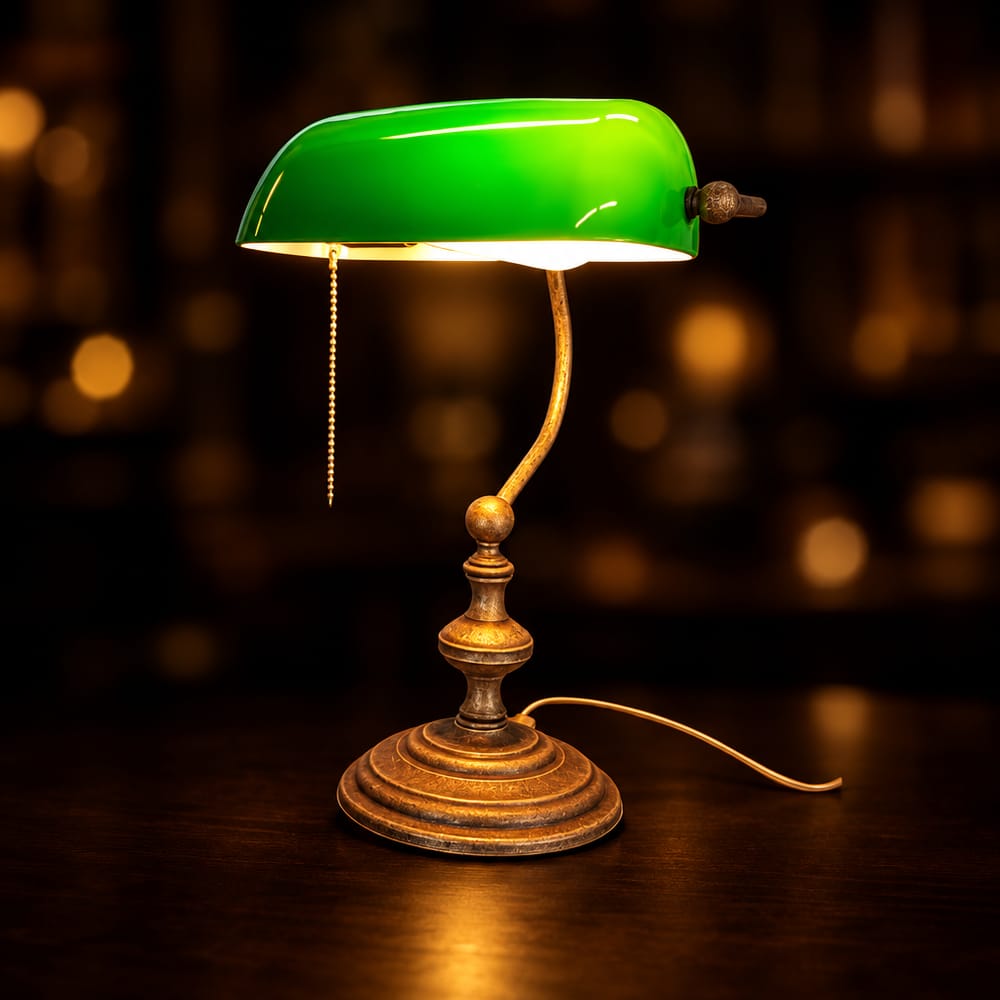
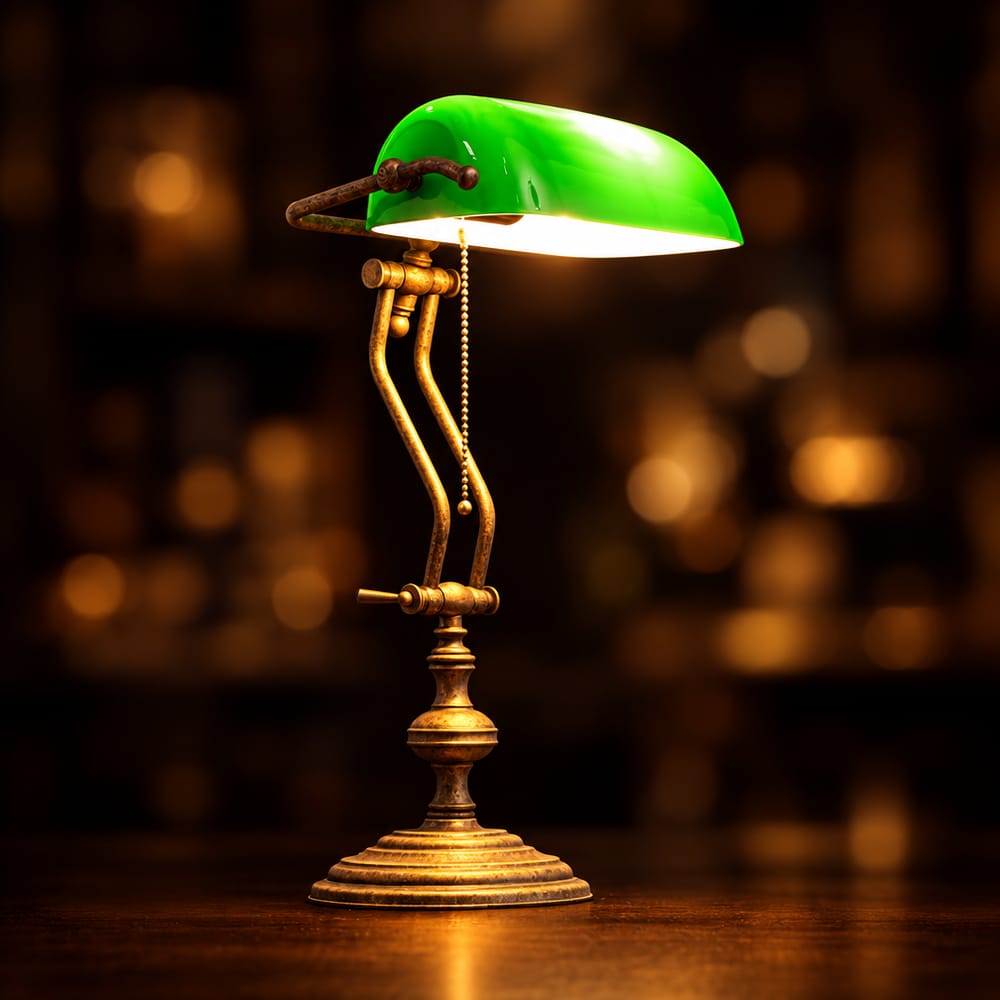
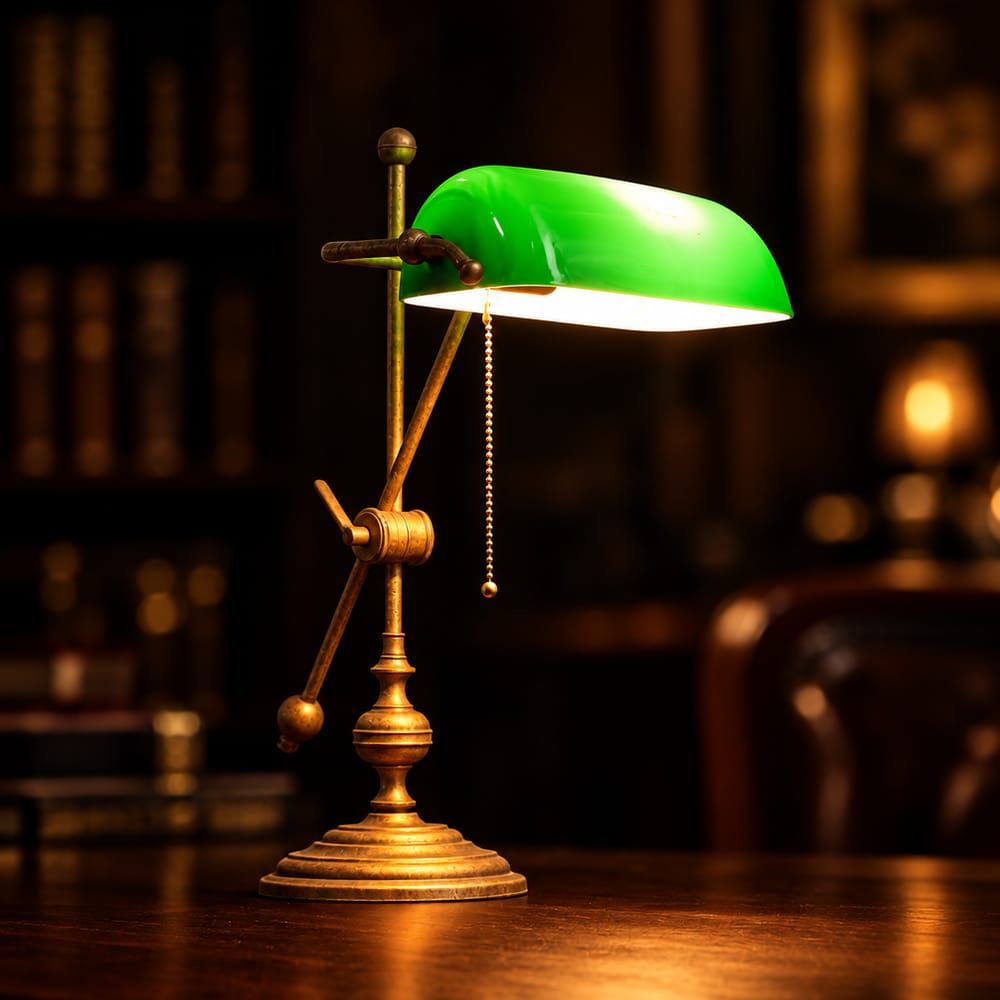
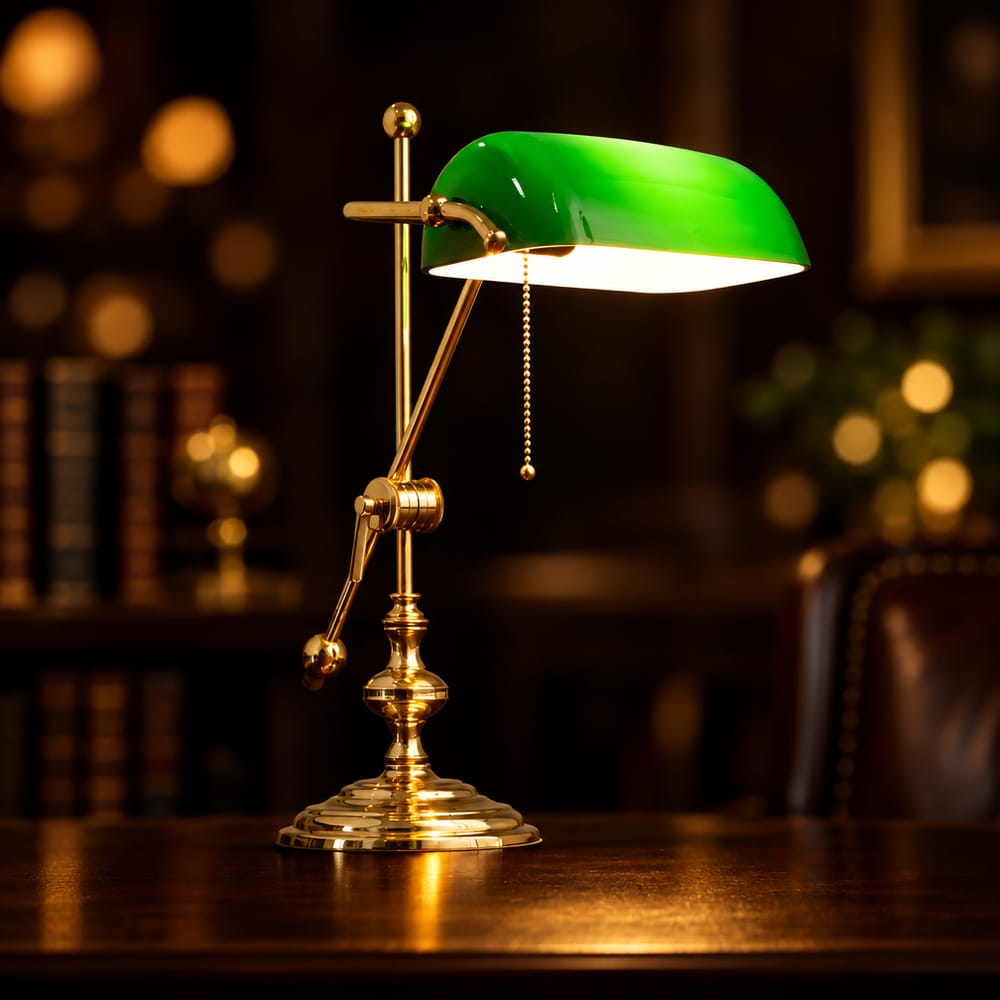
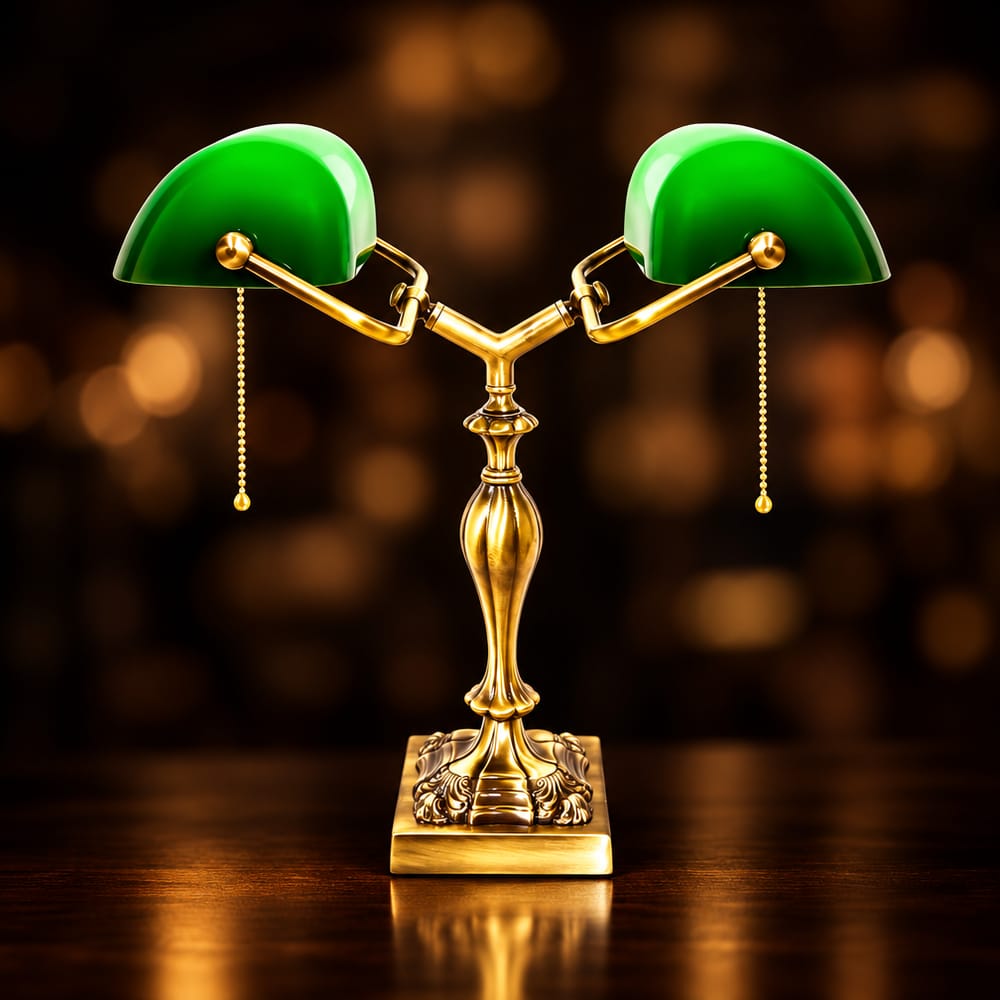
A prestigious item, a great classic of luxury, a symbol of power from the 1930s that remains relevant today. More than a century after its inception, the Bankers Lamp continues to add charm and elegance to spaces around the world.
The “banker’s lamp” is a distinctive desk lamp with a green glass shade and a brass base, often associated with traditional banking offices. It became popular due to its design, which was created by Harrison D. McFaddin in the early 20th century.
The original design of Emeralite featured a minimalist brass base and a green glass lampshade on the outside and white on the inside, casting a pleasant light when the bulb was on. This design greatly contributed to its success in the American market, known as the Bankers lamp.
The production of the lampshades was entrusted to J. Schreiber & Neffen, located in what is now the Czech Republic, for their excellent quality. Over time, Emeralite underwent changes, such as adding decorations to the brass base and introducing a clamp to adjust the lampshade, improving the direction of the light beam.
The green shade is especially significant because it was thought to have a calming effect, which helped to reduce the strain caused by early electric lights, which could be quite harsh. This theory was backed by the use of green visors in the workplace at the time, a trend particularly favored by workers in finance, where long hours of concentrated work were common.
Between 1909 and 1939, three series of Emeralite were produced, gaining great popularity for its functional design and ability to direct light. However, the outbreak of World War II in 1939 led to the suspension of the collaboration with J. Schreiber & Neffen, forcing McFaddin to use metal shades instead of glass. This significant change led to the purchase of the company by Charles Inness-Brown, who further modified the design of Emeralite, leading to its decline.
The lamp’s special appeal lies in both its practical function and its aesthetic: it provided a softer, more comfortable lighting option in the early days of electric lamps. Its lasting legacy in both real and fictional office environments is a testament to its distinctive design and the marketing success that cemented its association with banking and professionalism.
Over time, the Emeralite lamp, evolving through these variations, has taken on different names in various countries, becoming a symbol of elegance and professionalism in the world of lighting.